What Information Should Be Included in a Wedding Invitation? (Checklist)
A complete checklist of what to put on a wedding invitation in Nepal: names, hosts, date in BS and AD, saait, venue and map, events, janti, dress code, RSVP, contact and what to leave out.
Bihekocard Team3 min read
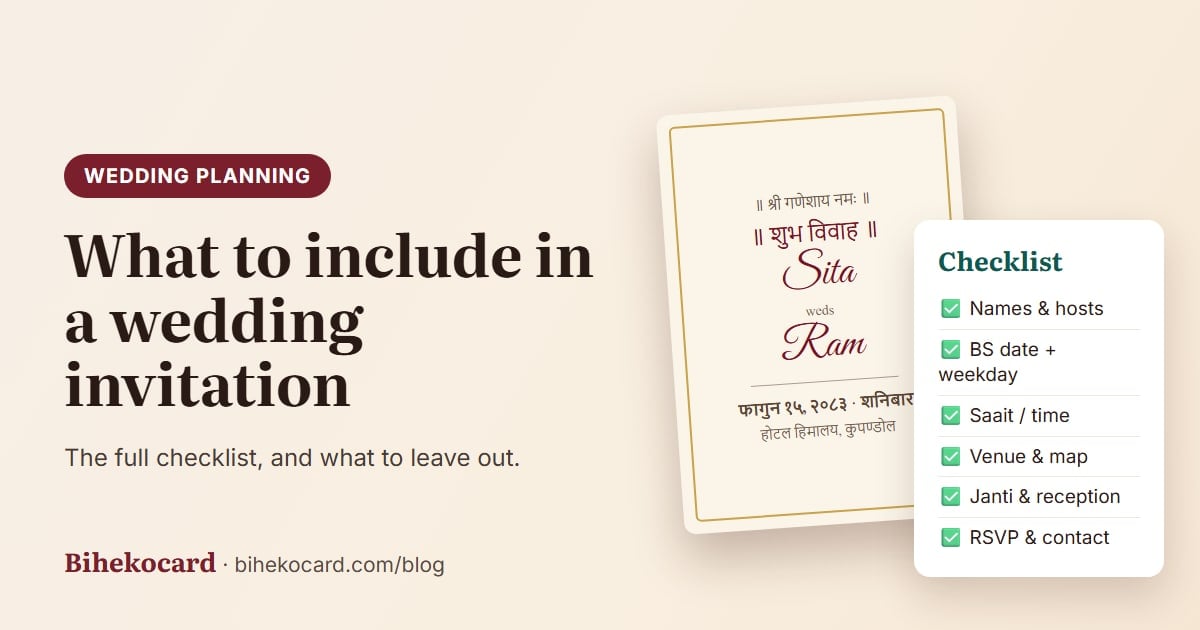
A wedding invitation has one job: to tell guests who is getting married, when and where, and what you want them to do. Everything else is decoration. Yet many cards in Nepal miss something basic, like the weekday or the reception venue, and the family spends the week before the wedding answering phone calls.
Use this checklist before you print or send your card.
Must have
- The couple’s names. Full names, with honorifics on a Nepali card (चि. for the groom, चि. सौ. का. for the bride).
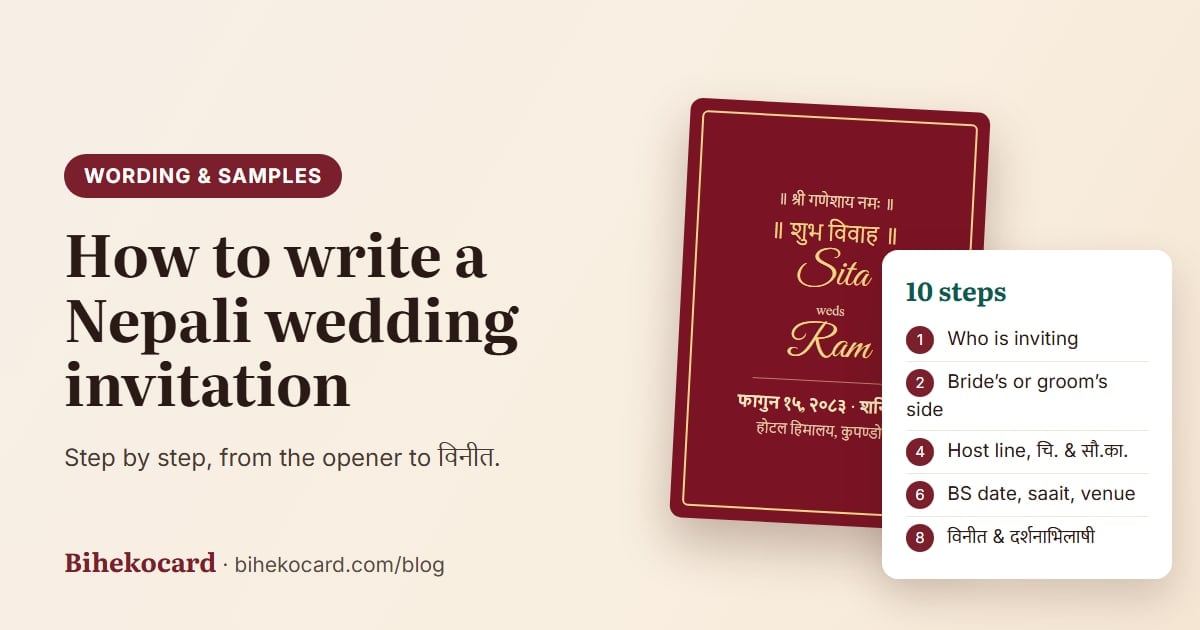
- The hosts. Who is inviting: parents, grandparents or the couple. On a traditional card the hosts’ names appear in the closing (विनीत ...).
- Both families. The other side’s parents and their place, for example “बानेश्वर निवासी श्री हरि शर्मा तथा श्रीमती गीता शर्माका सुपुत्र”.
- The date with the weekday. BS for Nepali guests (२०८३ फागुन १५ गते, शनिबार) and AD for guests abroad (Saturday, 27 February 2027).
- The time. The saait for the ceremony, and the start time for the reception.
- The venue. Name, area and city. A landmark helps.
- A request to attend. The polite line that makes it an invitation, such as सपरिवार उपस्थितिको हार्दिक अनुरोध गर्दछौं.
Should have
- Each event the guest is invited to: mehendi, haldi, wedding, reception, with its own date, time and place.
- Janti details on the groom’s side card: the departure time and place.
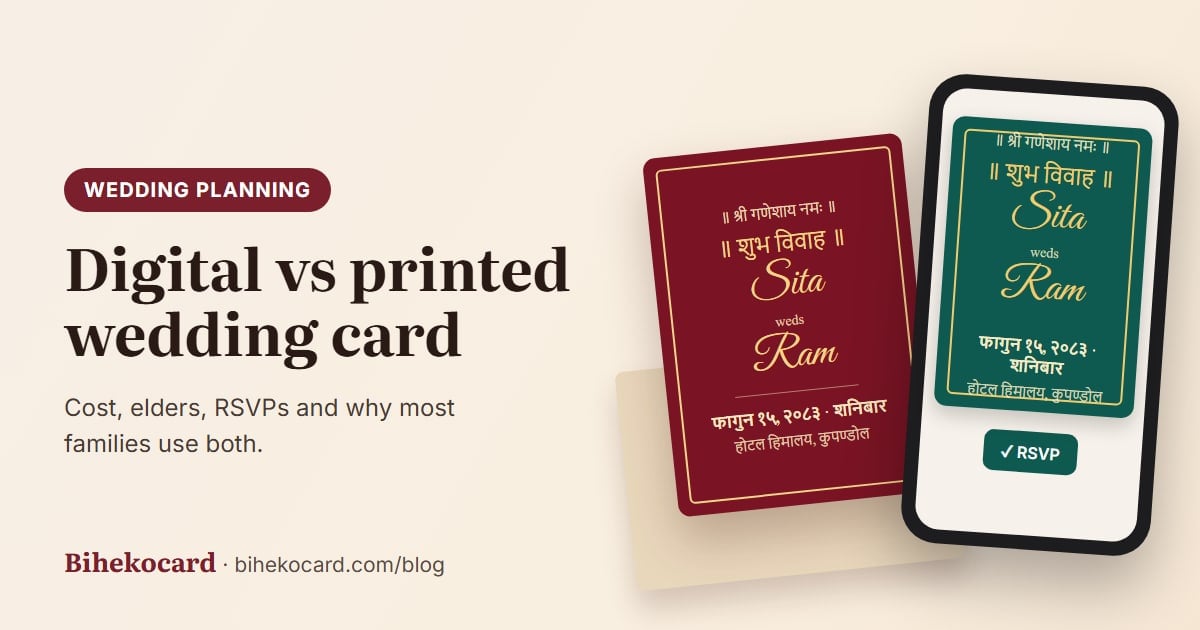
- RSVP: how and by when to confirm. Read what RSVP means on a wedding card.
- A contact number for questions, ideally someone other than the couple.
- A map link on a digital card, one for each venue.
- The English date beside the BS date, if anyone on your list lives abroad.
Nice to have
- A blessing opener: ॥ श्री गणेशाय नमः ॥ or ॥ शुभ विवाह ॥.
- The tithi, for families who follow it.
- A दर्शनाभिलाषी line with the names of siblings, nephews and nieces.
- A dress code or colour theme, for example for the haldi or sangeet.
- A photo of the couple, on modern or digital cards.
- Parking or transport notes for venues outside the city.
What to leave out
- Gift requests. Asking for cash or gifts on the card is considered impolite. If needed, share it personally.
- Every event for every guest. If colleagues are invited only to the reception, give them a reception-only card.
- Long paragraphs. The card is not a letter; keep each line short.
- Private phone numbers on a card that will be forwarded widely.
Common mistakes we see
- The BS date and weekday do not match.
- “Evening” with no time, so guests arrive two hours early or late.
- The ceremony venue is listed but the reception venue is missing.
- The bride’s and groom’s family names swapped between the two sides’ cards.
- Names spelled differently in the Nepali and English parts.
Quick checklist
- ☐ Couple’s names, with honorifics
- ☐ Hosts and both families
- ☐ BS date with weekday (and AD date)
- ☐ Saait or start time
- ☐ Venue with area
- ☐ Every event the guest is invited to
- ☐ Janti time (groom’s side)
- ☐ RSVP and contact
- ☐ Map link (digital)
- ☐ Proofread by both families
Let the card handle the details
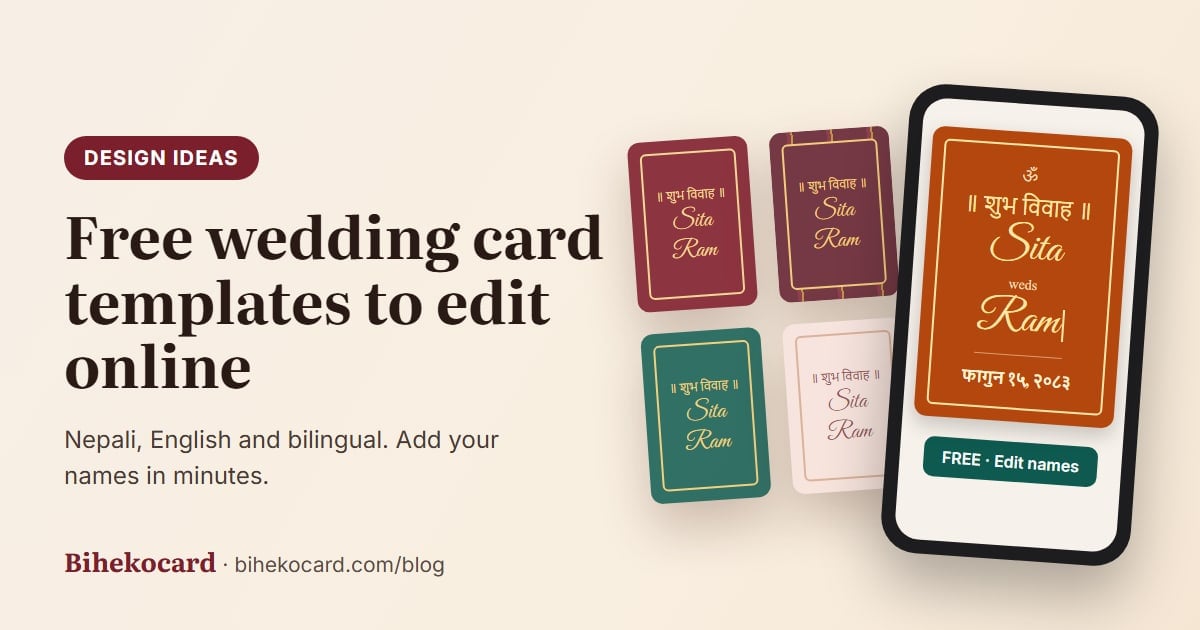
A digital card can do some of this work for you: the Nepali date and tithi fill in from the English date, each venue gets a map button, and guests reply on the card itself. Design your wedding card online for free from the wedding card templates, and see wording examples for the text.