Pasni Card in Nepali: Wording Samples for a Rice Feeding Invitation
Copy-ready pasni (annaprashan) card wording in Nepali and English for a son or daughter, the format elders expect, and how to share the invitation online.
Bihekocard Team4 min read
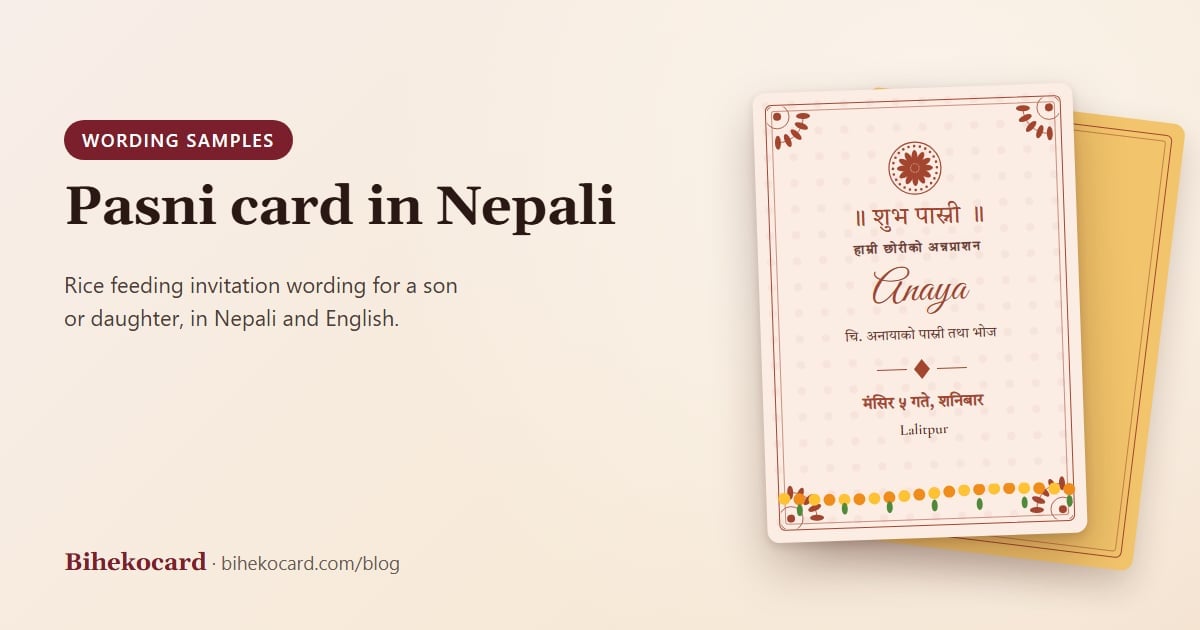
Pasni, also called annaprashan or the rice feeding ceremony, is a baby’s first taste of rice. The invitation is usually warm and short: a blessing, the baby’s name, the date and time, the venue and the family. This page gives you wording to copy in Nepali and English, for a son or a daughter.
Once you have your wording, you can put it on a pasni invitation card and send it as one link.
What goes on a pasni card
- A blessing such as ॥ श्री गणेशाय नमः ॥ or ॥ शुभ पास्नी ॥
- The baby’s name, with सुपुत्र (son) or सुपुत्री (daughter)
- The Bikram Sambat date, weekday and tithi
- The time of the ritual and, if different, the time of the meal
- The venue and area
- The parents, or the grandparents and parents, as hosts
Sample 1: Nepali pasni card for a son
॥ श्री गणेशाय नमः ॥
शुभ पास्नी
ईश्वरको कृपाले हाम्रो सुपुत्र चि. अयान अधिकारीको शुभ पास्नी (अन्नप्राशन) निम्न मितिमा गर्ने भएकाले उक्त अवसरमा सपरिवार पाल्नुभई आशीर्वाद दिनुहुन हार्दिक अनुरोध गर्दछौं।
मिति: २०८३ फागुन १२ गते, बुधबार
समय: बिहान १०:०० बजे
भोज: दिउँसो १२:०० बजेदेखिस्थान: हाम्रो निवास, बानेश्वर, काठमाडौं
निमन्त्रणाकर्ता: अधिकारी परिवार
Sample 2: Nepali pasni card for a daughter
॥ शुभ पास्नी ॥
हाम्रो प्यारी सुपुत्री आर्याको पहिलो भात खुवाई कार्यक्रममा हजुरको उपस्थिति र आशीर्वादको अपेक्षा गर्दछौं।
२०८३ फागुन १२ गते, बुधबार · बिहान १० बजे
होटल एभरेस्ट, नयाँ बानेश्वरआमा, बुबा र हजुरआमा हजुरबुबा
Writing the invitation “from” the baby, or from the grandparents, gives the card a softer feel that many families like.
Sample 3: English rice feeding ceremony invitation
Our little one is ready for the first taste of rice!
Please join us for the Pasni (Annaprashan) of our son
Ayaan Adhikari
Wednesday, 24 February 2027 (2083 Falgun 12)
Ceremony at 10 AM · Lunch from 12 noonOur home, Baneshwor, Kathmandu
With love, the Adhikari family
Sample 4: a short line from the baby
म पहिलो पटक भात खाँदैछु! मेरो पास्नीमा आएर आशीर्वाद दिनुहोला। – आर्या
I am having my first rice! Please come and bless me at my Pasni. – Aarya
Tips for a good pasni card
Check the day with the priest
Many families fix the pasni day and time with a priest, often around the sixth month for a boy and the fifth for a girl. Put the confirmed time on the card, not an estimate.
Add a photo of the baby
A photo is the part of a pasni card relatives enjoy most. Pick a clear, bright one and keep the text around it short.
Give the meal time
Most guests come for the lunch or dinner. If the ritual is early and private, say so and give the meal time as the main time.
Keep the names consistent
If the baby has a pet name and a formal name, choose one for the card. Relatives abroad will read the card without the family nearby to explain.
Sample 5: formal pasni card with grandparents as hosts
॥ श्री गणेशाय नमः ॥
हाम्रो नाति चि. अयान अधिकारीको शुभ अन्नप्राशन संस्कार निम्न मितिमा सम्पन्न हुने भएकाले उक्त अवसरमा सपरिवार पाल्नुभई नाति तथा परिवारलाई आशीर्वाद दिनुहुन सादर अनुरोध गर्दछौं।
निमन्त्रणाकर्ता: हजुरबुबा श्री कृष्ण प्रसाद अधिकारी, हजुरआमा श्रीमती शान्ता अधिकारी
तथा बुबा आमा
In many families the grandparents are the natural hosts for a pasni, especially when the family lives together. Naming them first is a mark of respect that elders notice.
What happens at a pasni, and why it matters for the card
Knowing the order of the day helps you decide which time to print.
- Puja: the family priest performs a short puja, usually in the morning.
- First rice: the baby is dressed in new clothes and fed a little rice kheer, traditionally by the maternal uncle (मामा) or an elder.
- The choosing game: in many families the baby is shown a tray of objects such as a book, a pen, jewellery and soil, and whatever the baby touches first is said to hint at the future. Guests love this part, so if it will happen, give that time too.
- Meal: lunch or dinner for relatives and friends.
If most guests are coming only for the meal, print the meal time in the largest size and the puja time underneath for close family.
Pasni card in English and Nepali together
A bilingual card works well when you have relatives abroad or friends from other communities. Put the Nepali wording first and the English underneath in a smaller size, or use a two-page card with one language on each page. Keep the date the same in both: the Bikram Sambat date in Nepali and the English date in English.
Make the pasni card online
Choose a design from the pasni card templates, type the baby’s name and the date, and the Nepali date and tithi appear on their own. Paste any wording from this page, add a photo and share the card as one link on WhatsApp, Viber or Messenger. Relatives reply from the card, so you can plan the meal with a real number.