Wedding Card Colours and Their Meaning: A Guide for Nepali Weddings
Red for blessing, gold for prosperity, yellow for haldi and marigolds: what each colour says on a Nepali wedding card, which palettes suit each tradition, and how to keep the card easy to read on a phone.
Bihekocard Team6 min read
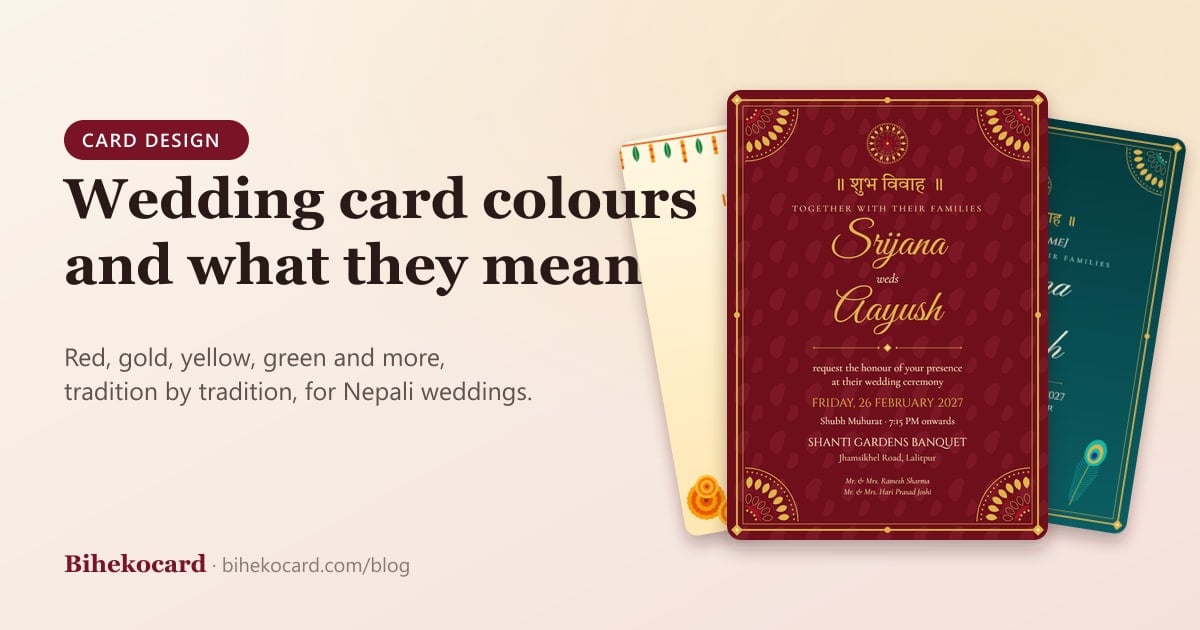
Colour is the first thing a guest notices, long before they read a name or a date. On a Nepali wedding card it also carries meaning: the red of sindoor and tika, the gold of a bride's jewellery, the yellow of haldi and marigold garlands. Choosing the palette well makes the card feel right to elders and look good on a phone screen.
The short answer: red or maroon with gold is the classic Nepali wedding card, because red stands for blessing and married life and gold for prosperity. Yellow and green suit daytime ceremonies such as haldi and mehendi. Each faith has its own favourites, and many families avoid cards that are mostly white or black for the main wedding.
Wedding card colours at a glance
| Colour | What it says | Best for |
|---|---|---|
| Red and maroon | Blessing, marriage, celebration | Hindu weddings, the main ceremony |
| Gold | Prosperity, formality, festivity | Borders, names and details on dark cards |
| Yellow and orange | Haldi, marigolds, warmth, a new start | Haldi, daytime and outdoor ceremonies |
| Green | Growth, mehendi, the pote of a married woman | Mehendi, Nikah and garden weddings |
| Blue and teal | Depth, calm, the peacock | Modern couples, Sikh weddings, receptions |
| Ivory and pastels | Softness, elegance, simplicity | Christian weddings, engagements, court marriage receptions |
Red and maroon: the colour of blessing
For most Nepali Hindu families, red is the wedding colour. The bride traditionally wears red, sindoor is applied at the ceremony, and the red tika marks every blessing from elders. A red or deep maroon card therefore reads instantly as a wedding, even before anyone reads the words ॥ शुभ विवाह ॥ at the top.
Deep maroon is usually a better choice than bright red for the card itself. It feels richer, it holds gold text well, and it does not glare on a phone at night. Lali gurans, Nepal's national flower, gives a lighter, floral way into the same red family.
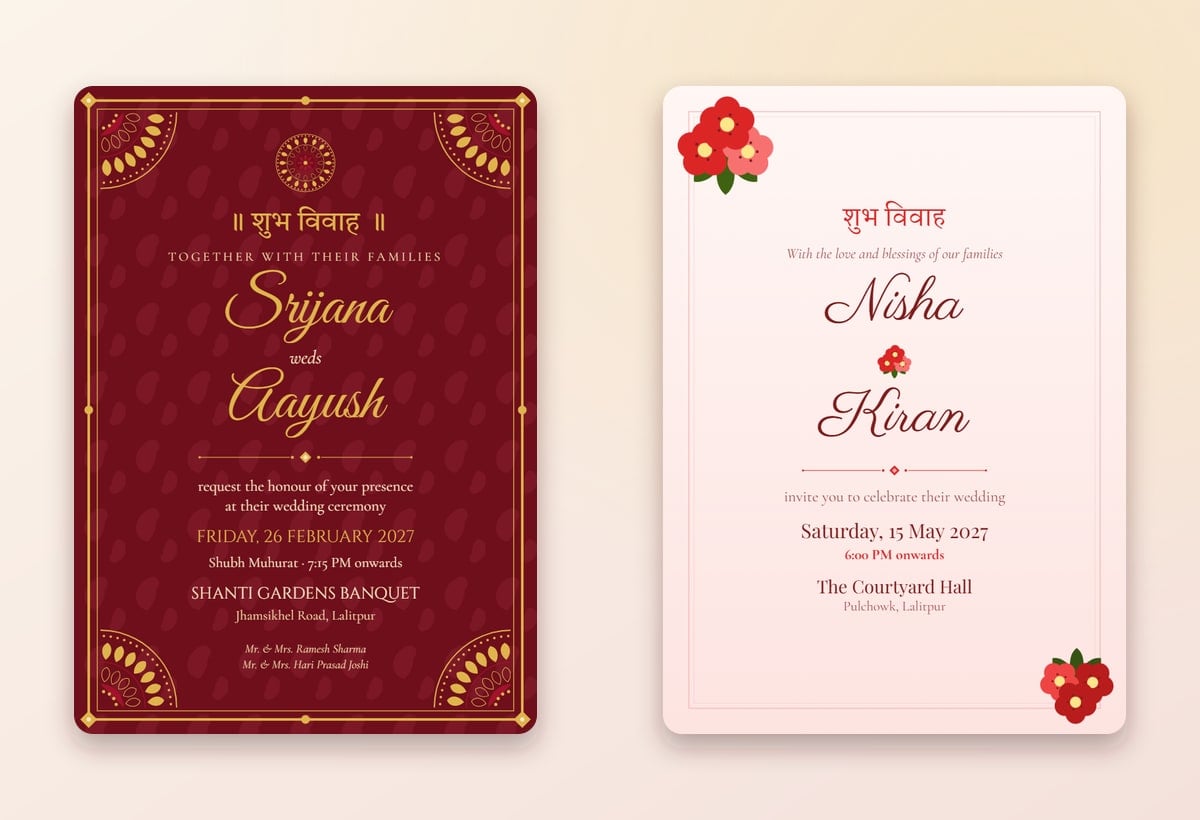
Browse Hindu wedding card templates to see maroon, red and rhododendron designs with your own names.
Gold: prosperity and ceremony
Gold is less a background colour than a finishing one. It frames the card, highlights the couple's names and signals that this is a formal occasion. It works best on a dark ground such as maroon, emerald, navy or black, where it shines instead of fading.
On a light card, use a deep antique gold or bronze for text and keep bright gold for borders and motifs. Pale gold words on an ivory background look elegant in print but become hard to read on a phone in daylight.
Yellow and orange: haldi, marigolds and daytime
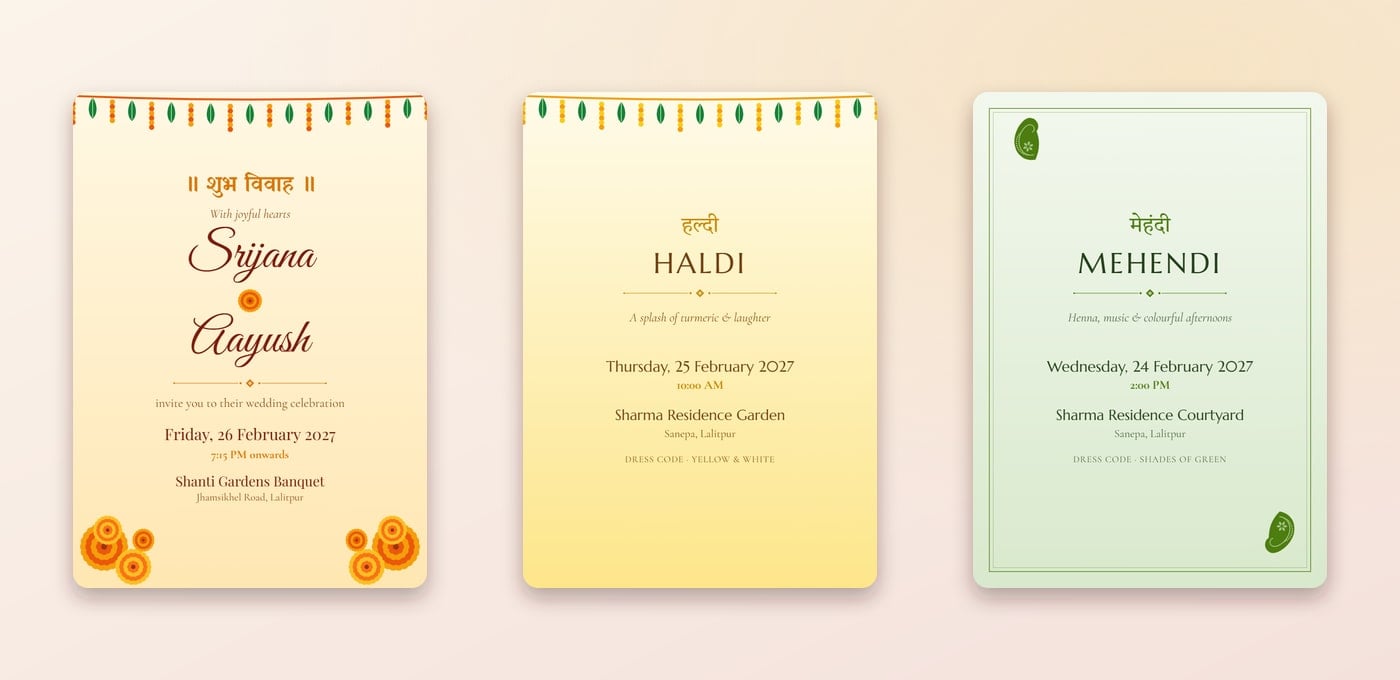
Yellow belongs to the haldi ceremony, when turmeric paste is applied to the bride and groom, and to the marigold (sayapatri) garlands that decorate Nepali homes for weddings and festivals. It is cheerful, warm and associated with a fresh start, which makes it a natural choice for daytime and outdoor weddings.
Orange marigold motifs on a cream or butter-yellow card feel festive without being heavy. If your wedding has several ceremonies, a yellow page for haldi sits beautifully next to a green one for mehendi.
Green: mehendi, growth and new life
Green is the colour of mehendi and of new growth. In Nepal it is also tied to marriage through the pote, the necklace of green glass beads that many married Hindu women wear. Soft sage and leaf greens suit mehendi invitations; deep emerald with gold is a favourite for Muslim Nikah cards.
Blue and teal: calm, modern and regal
Blue is not a traditional Hindu wedding colour, but deep teal and peacock blue have become popular with modern couples, often paired with gold and a peacock feather motif. Royal blue with saffron (kesri) is the classic pairing on Sikh Anand Karaj cards, echoing the colours of the Khalsa.
Colours by tradition
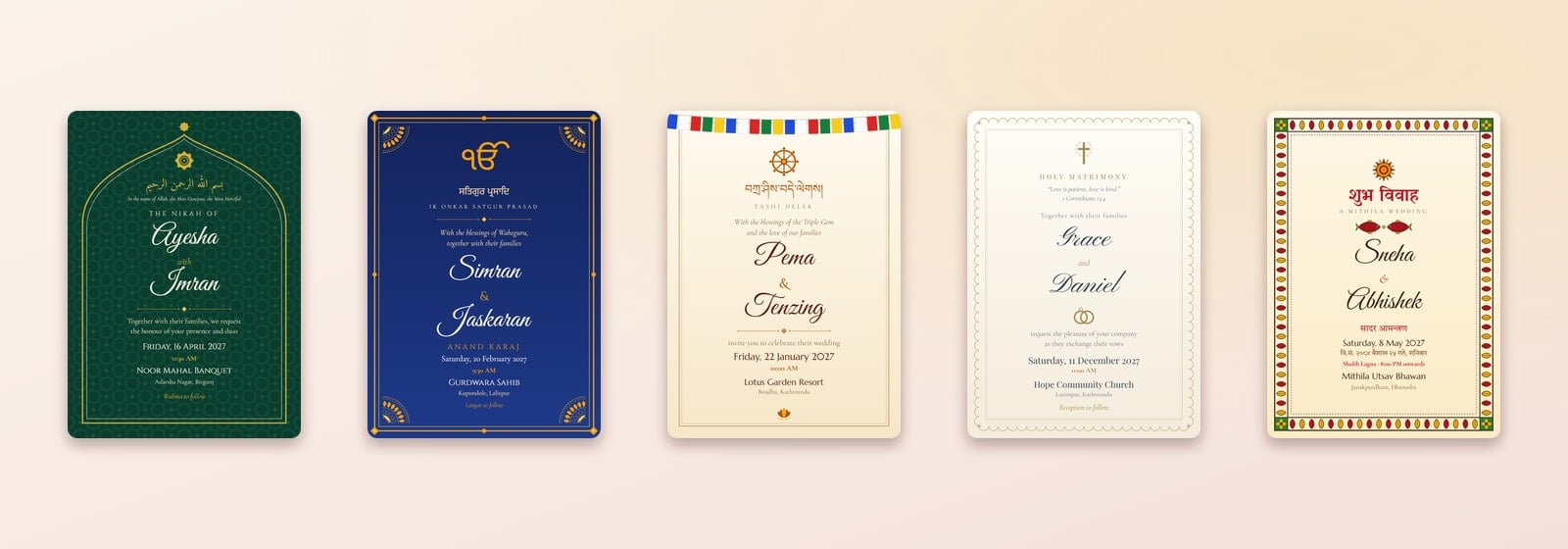
Nepal's weddings are as varied as its communities, and each tradition has palettes that feel familiar to its guests.
Hindu
Red, maroon and gold for the main ceremony, with yellow and green for haldi and mehendi pages. A Ganesh or kalash motif at the top is common. See Hindu wedding cards.
Buddhist
The five colours of the prayer flags carry meaning of their own: blue for sky, white for air, red for fire, green for water and yellow for earth. A strip of prayer flags across a warm cream card, with maroon or saffron text, is simple and instantly recognisable. See Buddhist wedding cards.
Muslim
Emerald or deep green with gold is the most common Nikah palette, often with an arch and geometric pattern. Ivory and gold is a lighter alternative for Walima invitations. See Nikah invitation cards.
Christian
Ivory, white, silver and soft botanical greens suit church weddings, often with lace details and a verse. See Christian wedding cards.
Sikh
Royal blue and kesri, sometimes with ivory, framed by gold borders and an Ik Onkar opener. See Anand Karaj cards.
Mithila
Madhubani painting brings bright red, yellow, green and black line work, with fish and sun motifs for luck and fertility. These cards are colourful by design, so keep the text area plain. See Mithila and Maithili cards.
Colours many families avoid
In Hindu custom, white is worn in mourning, so a card that is almost entirely white can feel wrong to older relatives, even though ivory and cream are perfectly fine. A card that is mostly black raises similar doubts for the main ceremony.
That said, black and gold has become a stylish choice for receptions, engagement parties and modern couples. If you love it, use it for the reception page and keep the main wedding page in a warmer colour, or simply check with the elders first.
Five rules for a palette guests can actually read
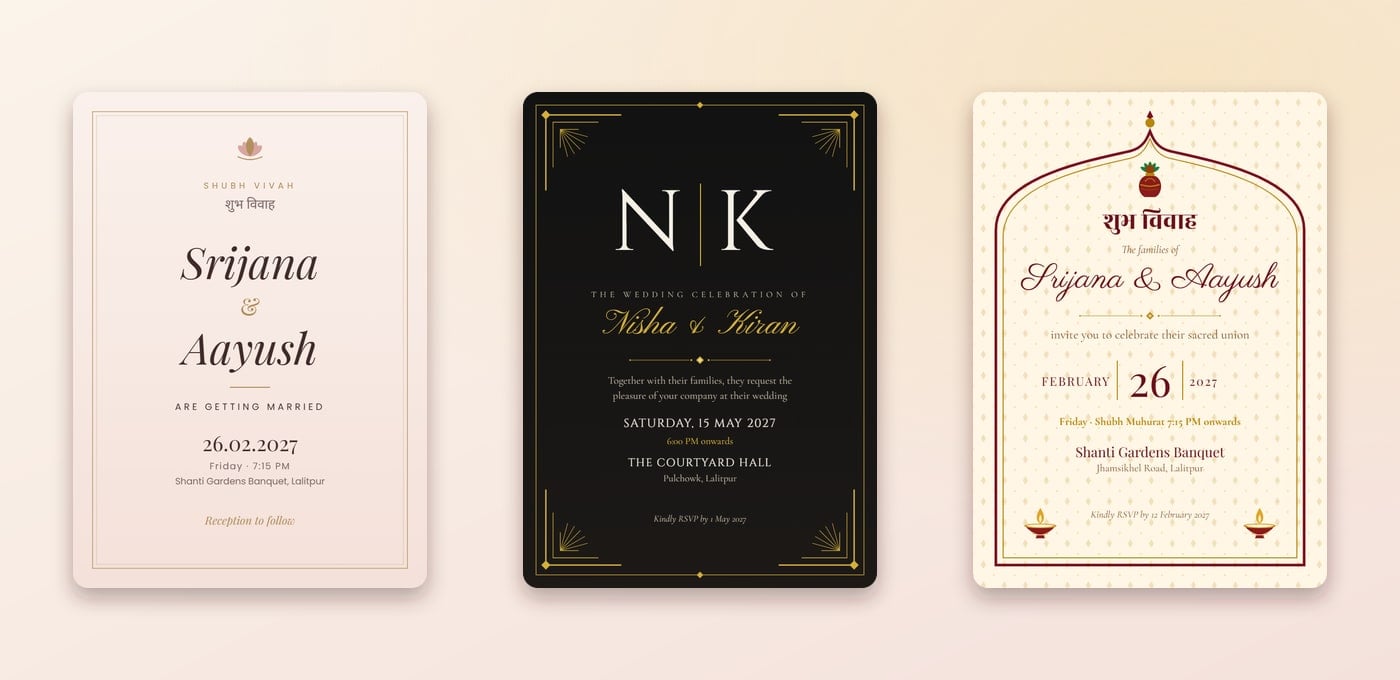
- Pick one dark, one light and one accent. For example maroon, ivory and gold. More colours than that start to compete.
- Check the contrast. Names and dates must stand out clearly from the background. Dark text on light, or light text on dark, never mid-tone on mid-tone.
- Test on your phone outdoors. Most guests open the card on WhatsApp or Viber, often in daylight. If you squint, they will too.
- Give Devanagari some weight. Nepali script with thin strokes in pale colours disappears quickly. Use a darker shade for Nepali lines.
- Keep ceremony pages in one family. Different colours for mehendi, haldi and the wedding look lovely together when they share the same fonts, borders and gold.
For layout and style ideas beyond colour, read wedding card design ideas.
Try the colours with your own names
The quickest way to choose is to see your names on real designs. Open the template gallery, type your names and date once, and every card redraws with them, so you can compare maroon, marigold, emerald and teal side by side before you decide.